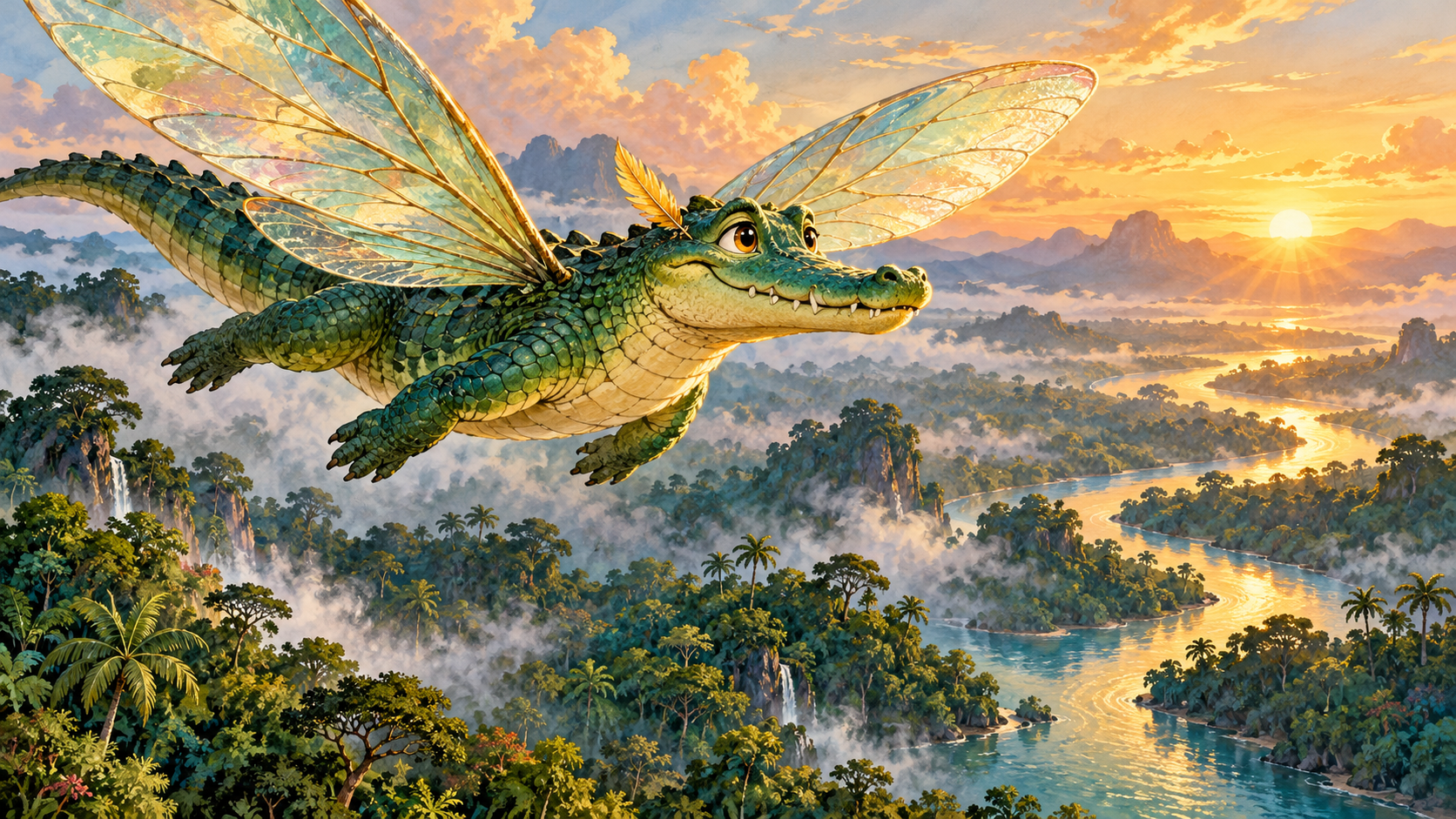
Every morning, Milo the crocodile watched the swallows stitch their shadows across the river. He loved his muddy bank, the warm stones, and the silver fish that slipped past his nose. But whenever a bird vanished beyond the blue hills, he wondered what the world looked like from above.
“Crocodiles belong in the water,” the herons told him. Milo never argued. He simply kept looking up.
A feather in the reeds
One evening, he found a golden feather tangled in the reeds. Beside it sat a small dragonfly whose wings had become wet in a sudden shower. Milo lifted a broad leaf over her and waited until the rain stopped.
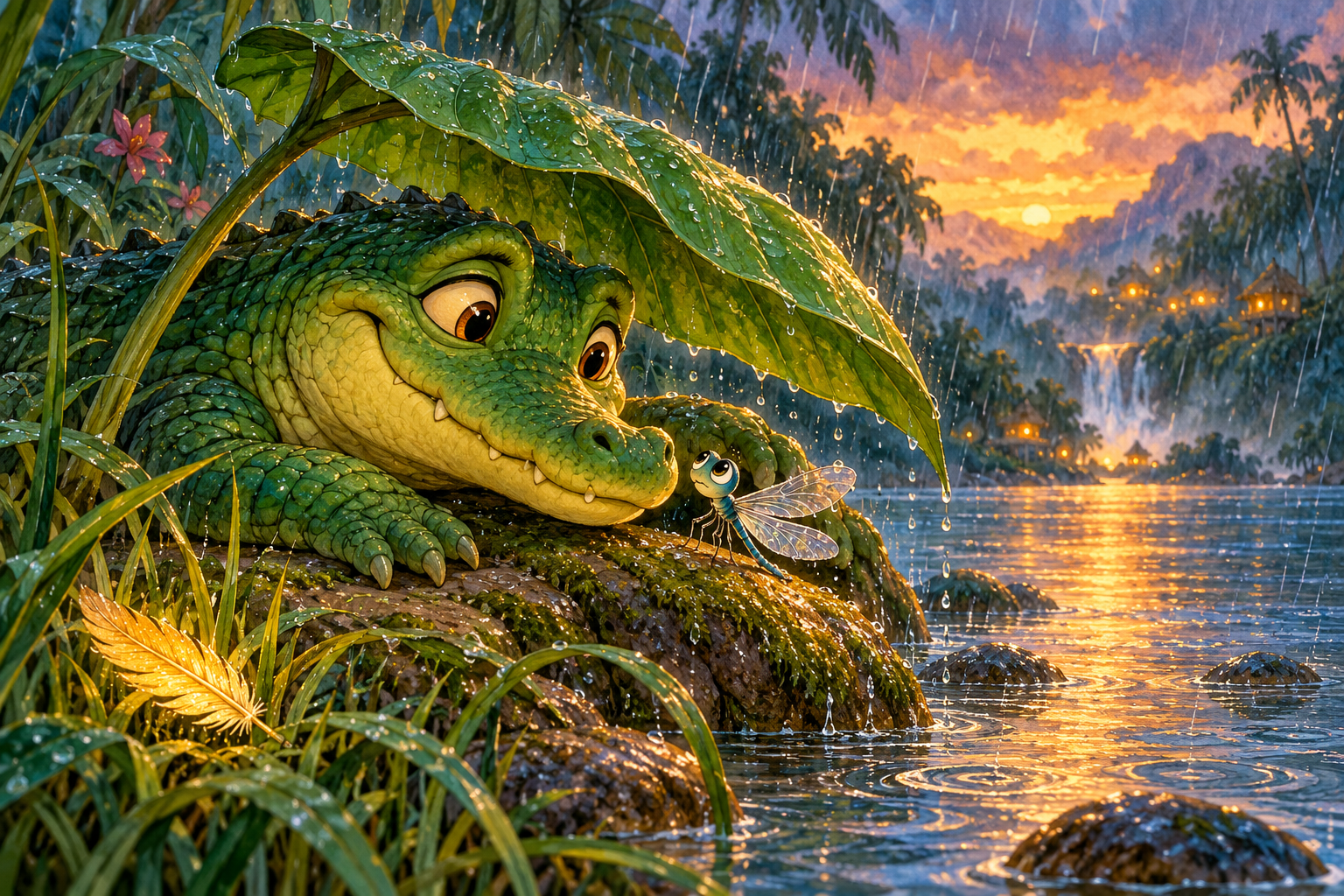
“You could have swallowed me,” she said, shaking the last drop from her tail.
“That would have been a poor way to make a friend,” Milo replied.
The dragonfly laughed. “Then let a friend lend you something.” She touched the golden feather to his shoulders. Two great, glassy wings unfolded from his back, catching the evening light like windows made of honey.
“They will carry you until sunrise,” she said. “Where you go is up to you.”
The first flight
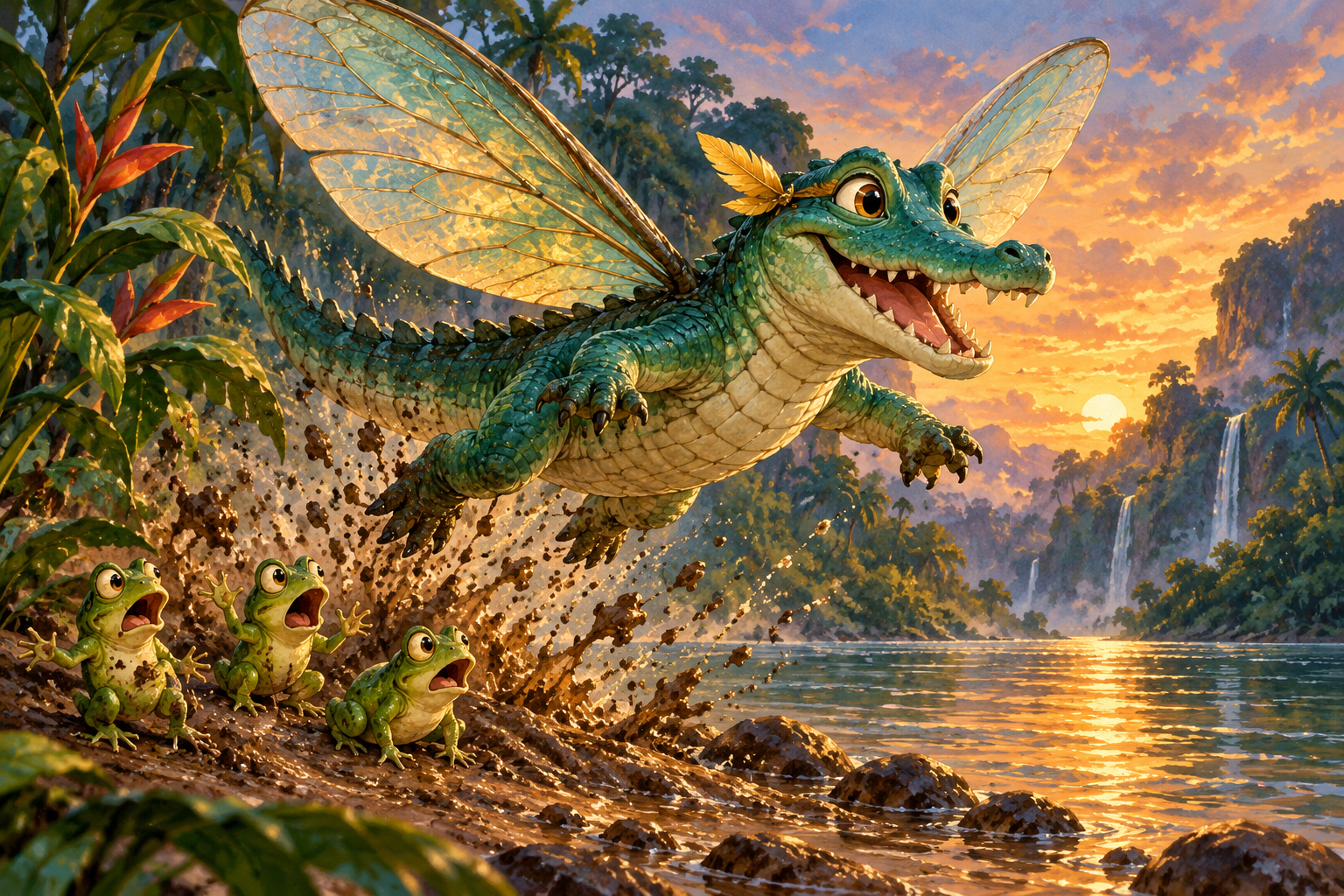
Milo flapped once and knocked himself sideways into a bush. He flapped twice and showered three indignant frogs with mud. On the third try, he remembered how swallows leaned into the wind. He stretched his tail behind him, opened his wings, and rose.
The river curled beneath him like a ribbon dropped on a green blanket. Above the trees, the air smelled of rain and distant flowers. Milo laughed so loudly that a flock of parrots scattered, then returned to stare at the flying crocodile.
He flew toward the blue hills. Beyond them, he had heard, lay a lake so clear that the stars could see their own reflections. For once, nothing stood between him and the place he had imagined.
A light below
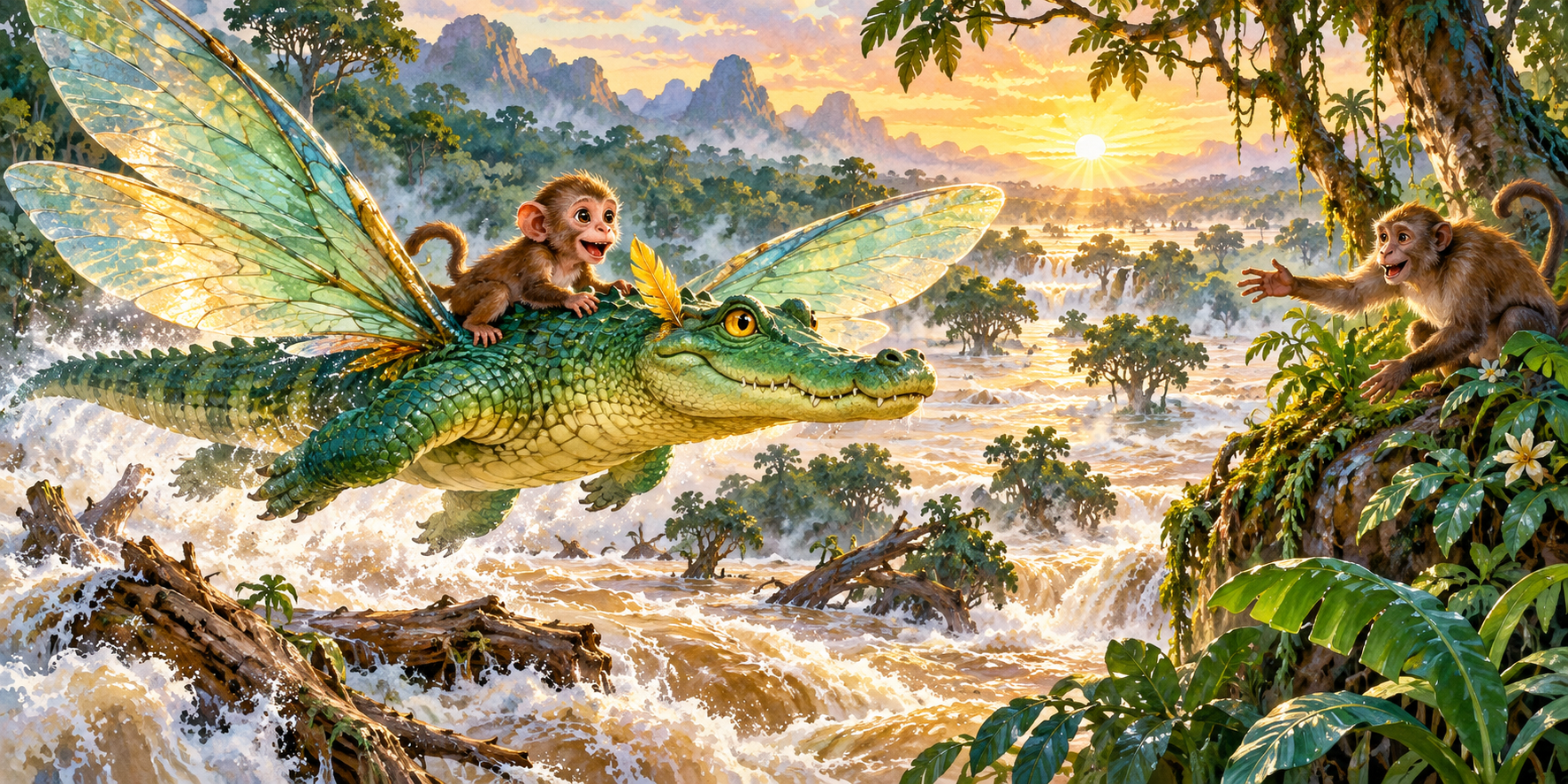
Then he noticed a lantern bobbing in the flooded forest. On a narrow island, a young monkey clung to a branch. The night’s rain had swept away the fallen tree she used as a bridge. Across the rushing channel, her family called until their voices grew hoarse.
Milo glanced at the hills. Their edges were turning pale. Sunrise was close.
He circled once, folded his wings, and landed beside the branch. “Climb on,” he said. The monkey hesitated at the sight of his teeth, so he shut his mouth and lowered his head. A moment later, small fingers gripped the ridges along his back.
The crossing was short, but flying with a passenger was harder than flying alone. His wings trembled. He cleared the water by the length of a lily stem and reached the far bank just as the first sunlight touched the trees.
The monkey scrambled into her mother’s arms. Milo’s wings dissolved into a thousand golden sparks. He landed on his belly with a soft, undignified thump.
Another morning
By breakfast, every creature along the river had heard about the crocodile who flew. The herons asked him what the clouds felt like. The frogs wanted to know whether he had meant to splash them. Milo answered the first question and politely ignored the second.
Later, the dragonfly found him resting on his warm stone. “You never reached the lake,” she said.
“No,” Milo admitted. He watched the young monkey leap safely between two branches. “But I had a passenger.”
The dragonfly settled beside him. Behind his ear, the golden feather stirred, though there was hardly any wind.
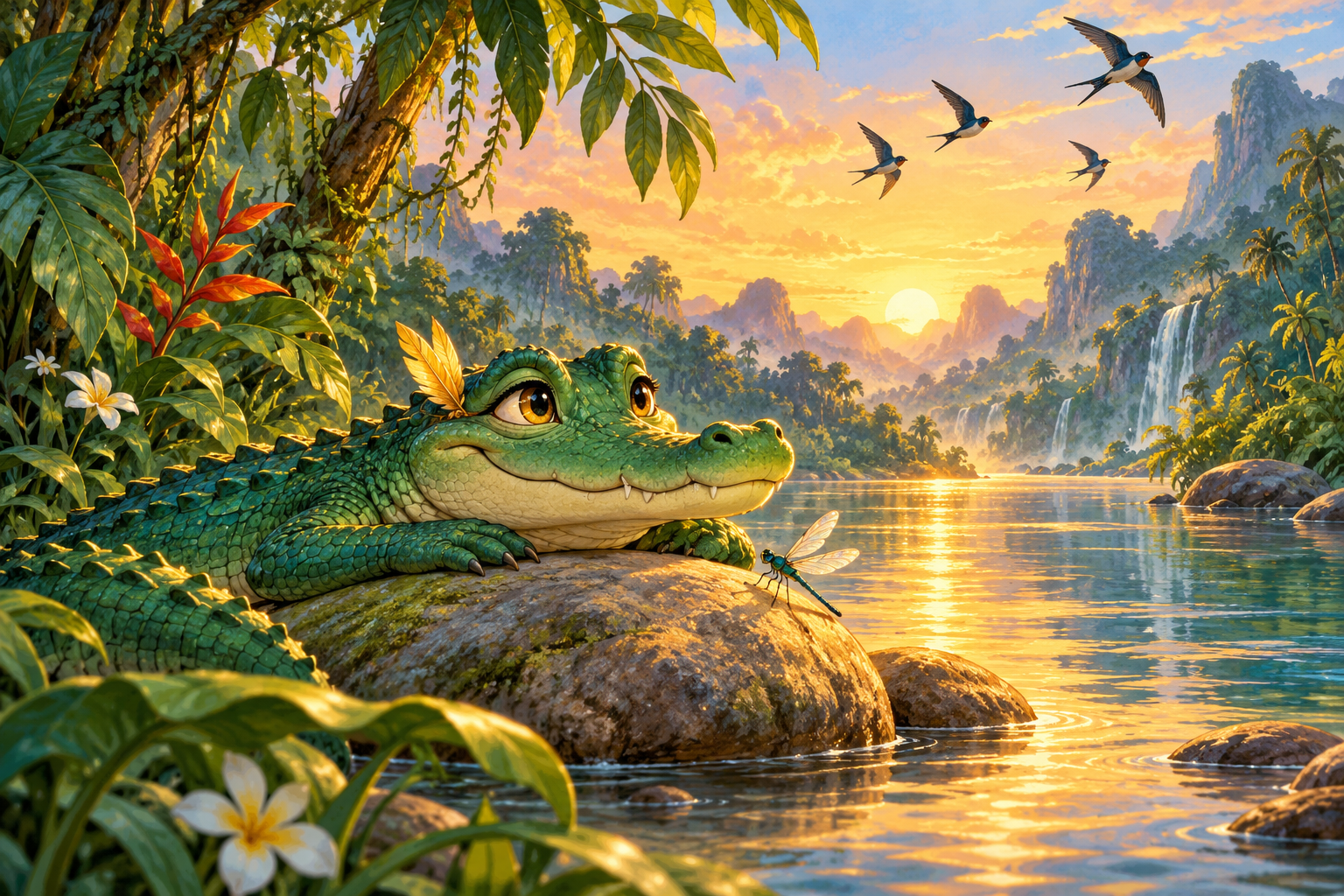
And when the swallows crossed the river that morning, Milo still looked up.
Leave a Reply